
Eating Less but Still Not Losing Weight? A Dietitian Explains Why
Have you been eating less, avoiding your favourite foods, or even skipping meals, yet the weighing scale refuses to move? If you are trying to lose weight, this can be frustrating. However, eating less does not always mean eating right for your body.
Weight management depends on several factors, including your overall calorie intake, food quality, protein and fibre intake, physical activity, sleep, stress, hydration and individual metabolism. Extremely restricting food may sometimes make your weight-loss journey harder to sustain.
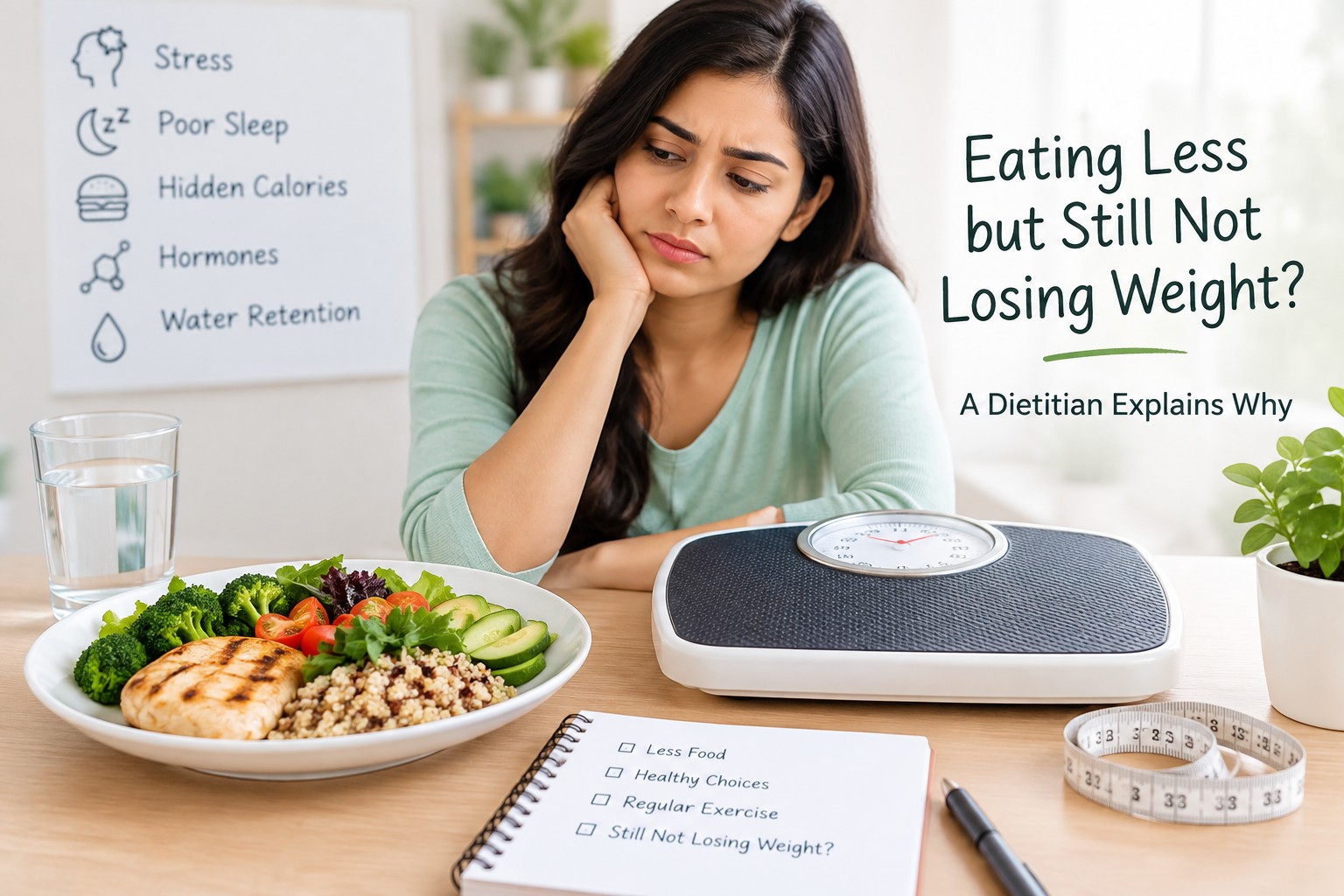
Weight Management
At Nourish Meals by Richa Mutha, the focus is on practical, balanced and sustainable nutrition rather than unnecessary food restrictions. Let us understand some common reasons why you may not be losing weight despite eating less.
Eating Less but Not Losing Weight? Here’s What Could Be Happening
1. You May Be Underestimating Your Actual Food Intake
One of the most common reasons for a weight-loss plateau is unintentionally consuming more calories than expected.
Small portions of calorie-dense foods can add up throughout the day. Cooking oil, dressings, sauces, sugary beverages, snacks, dry fruits and frequent tasting while cooking may contribute significant calories without making you feel very full.
This does not mean you need to count every calorie forever. Instead, becoming more aware of portions and eating patterns can help identify where your diet may need adjustment.
2. Eating Too Little Can Make Your Diet Difficult to Sustain
Eating extremely small meals may seem like a quick way to lose weight, but it can leave you hungry, tired and more likely to experience cravings later.
When meals are not satisfying, you may eventually overeat or snack more frequently. A sustainable weight-loss plan should provide adequate nutrition while creating an appropriate calorie deficit.
The goal is not simply to eat less, but to eat better and appropriately for your individual needs.
3. Your Meals May Lack Enough Protein
Protein plays an important role in a healthy weight-management diet. It helps support muscle maintenance and can contribute to feelings of fullness after meals.
If your meals mainly consist of carbohydrates with very little protein, you may feel hungry again relatively quickly.
Depending on your dietary preferences, protein can come from foods such as:
- Dal and legumes
- Paneer and curd
- Milk
- Eggs
- Fish and lean meats
- Soy and tofu
- Other protein-rich foods
4. You May Not Be Getting Enough Fibre
Fibre-rich foods can make meals more filling and support digestive health. Vegetables, fruits, whole grains, legumes, pulses, nuts and seeds can all contribute fibre to your diet.
Instead of simply reducing your food quantity, consider improving the nutritional quality of your meals by including plenty of vegetables, adequate protein and appropriate portions of whole-food carbohydrate sources.
5. Liquid Calories Can Go Unnoticed
Drinks can sometimes contribute more calories than expected without providing the same level of fullness as solid food.
Sweetened tea or coffee, soft drinks, packaged juices, flavoured beverages, shakes and other sugary drinks may contribute additional calories throughout the day.
Choosing water and other lower-calorie beverages more often can be a simple improvement, depending on your overall dietary pattern.
6. Your Physical Activity May Have Decreased
Weight management is not determined by food alone. Your daily movement also matters.
You may be eating less but moving significantly less because of a sedentary job, long hours of sitting, reduced exercise or changes in your daily routine.
Walking more, taking regular movement breaks and incorporating appropriate strength or resistance training can complement a balanced eating plan.
7. Poor Sleep May Affect Your Eating Patterns
Sleep is often overlooked during a weight-loss journey. Consistently inadequate or poor-quality sleep can affect hunger, cravings, energy levels and daily food choices.
Instead of focusing exclusively on eating less, consider your complete lifestyle. A consistent sleep schedule, regular physical activity and balanced meals can make your overall routine more sustainable.
8. Stress Can Influence Your Eating Habits
Long-term stress can affect appetite and food choices. Some people may eat more when stressed, while others may unintentionally skip meals and later experience intense hunger.
Emotional eating can also make it difficult to maintain consistent eating patterns.
Managing stress through adequate rest, physical activity, hobbies, relaxation techniques and mindful eating may support healthier habits.
9. The Weighing Scale Does Not Show the Whole Picture
Your body weight can fluctuate from day to day because of water retention, digestion, sodium intake, hormonal changes and other factors.
Therefore, a few days without seeing a decrease does not necessarily mean your efforts are failing. Instead of judging progress based only on daily weight, consider other indicators such as:
- Changes in waist measurements
- How your clothes fit
- Energy levels
- Strength and fitness
- Consistency with healthy habits
- Long-term weight trends
10. Your Body and Lifestyle Are Individual
There is no single diet that works exactly the same way for everyone. Age, body composition, activity level, food preferences, lifestyle, sleep and several other factors can influence nutritional requirements and weight-management progress.
Certain medications and underlying health conditions can also affect body weight. If you are consistently struggling to lose weight despite making appropriate lifestyle changes, discussing your situation with a qualified healthcare professional or dietitian can be helpful.
So, Should You Simply Eat Less to Lose Weight?
Not necessarily. Successful weight management is generally more sustainable when it focuses on balanced nutrition, appropriate portions, adequate protein and fibre, regular movement, good sleep and consistent habits rather than severe restriction.
Instead of asking, “How little can I eat?”, a better question is:
“How can I nourish my body while creating healthy, sustainable habits?”
That shift can make your relationship with food healthier and your weight-management journey more practical.
What Should a Balanced Weight-Management Plate Look Like?
Instead of asking, “How little food can I eat?”, ask:
“How can I make this meal more balanced and satisfying?”
A practical meal can include a combination of:
- Protein: Dal, beans, paneer, curd, eggs, tofu, fish or lean meat.
- Vegetables: Include a variety of seasonal vegetables according to your preferences.
- Carbohydrates: Choose suitable portions of rice, roti, oats, millets, potatoes or other carbohydrate sources.
- Healthy Fats: Include appropriate portions of nuts, seeds or cooking oils.
7 Practical Changes to Try Instead of Simply Eating Less
If your weight-loss progress has stalled, consider these habits:
- Build Balanced Meals: Include protein, vegetables, fibre-rich foods and suitable portions of carbohydrates.
- Pay Attention to Portions: Even nutritious foods should be consumed in appropriate quantities.
- Eat Mindfully: Slow down, minimise distractions and pay attention to hunger and fullness cues.
- Reduce Unplanned Snacking: Identify when and why you snack instead of automatically reaching for food.
- Move More: Add regular walking and other enjoyable physical activities to your routine.
- Prioritise Sleep: Create a consistent sleep routine and aim for adequate rest.
- Track Progress Over Time: Look at trends rather than reacting to every daily change on the scale.
How Nourish Meals by Richa Mutha Can Support Your Nutrition Journey
At Nourish Meals by Richa Mutha, nutrition is not about starving yourself or following unrealistic food rules.
The goal is to encourage a more practical relationship with food where healthy eating can become part of your everyday lifestyle.
A personalised nutrition approach can help you understand how to:
- Make balanced meals
- Choose appropriate portions
- Include sufficient protein
- Increase fibre-rich foods
- Manage cravings
- Plan meals around your routine
- Make better choices when eating outside
- Develop sustainable habits
If you are eating less but still not losing weight, do not immediately assume that you need to eat even less. Your food choices, portions, activity, sleep, stress, consistency and individual nutritional needs all matter.
Weight loss is not about starving yourself. It is about developing a balanced approach that you can realistically maintain.
Nourish Meals by Richa Mutha believes that healthy nutrition should nourish your body, fit into your lifestyle and support sustainable change.
Contact us today!!! If your weight-loss journey feels confusing or you are unsure where to begin, consider seeking guidance from a qualified dietitian for an approach suited to your individual needs.
FAQs
You may be underestimating portions, consuming calorie-dense foods or drinks, getting insufficient protein or fibre, moving less than before, or dealing with factors such as poor sleep and stress. Individual health factors can also play a role.
Severe restriction is not a sustainable weight-loss strategy. It can increase hunger, fatigue and cravings and may make it harder to maintain healthy eating habits. A suitable calorie deficit should be personalised rather than based on extreme restriction.
Protein requirements vary according to factors such as body size, activity level, age and health status. A dietitian can help determine an appropriate amount for your individual needs.
Skipping meals is not necessary for weight loss. Some people may prefer structured meal timing, while others may find that skipping meals leads to excessive hunger later. The overall dietary pattern and sustainability are important.